
Escape Room Team Building SF Bay Area: 6 Best Experiences (2026)
Discover why escape rooms reveal team dynamics. Explore 6 best experiences for San Francisco Bay Area teams, from fully virtual ($25/person) to outdoor hybrids ($50/person).
How to Choose the Right Activity
The best team building activity depends on your group's size, preferences, and goals. If your team thrives on problem-solving, look for escape rooms or strategy-based challenges. If you want something more social and relaxed, cooking classes or art workshops tend to hit the right note. Consider whether your team needs an energy boost or a chance to slow down and connect.
Location and logistics can make or break a team event. Activities near your office or accessible by public transit will get better attendance, and shorter travel times mean more of the event time goes to the actual experience. In the Bay Area, neighborhoods like SoMa, North Beach, and downtown Oakland have high concentrations of team building venues.
Budget is often the deciding factor. Per-person pricing makes it easier to scale for different group sizes and get budget approval. Look for activities that include materials and facilitation in the price so there are no surprises. Events in Minutes shows pricing, duration, and group size for every activity, making side-by-side comparisons simple.
Escape Room Team Building SF Bay Area: 6 Best Experiences (2026)
Virtual and Remote-Friendly Escape Experiences
Best for distributed teams and flexible scheduling
Playground Escape Room
#1 Playground Escape Room
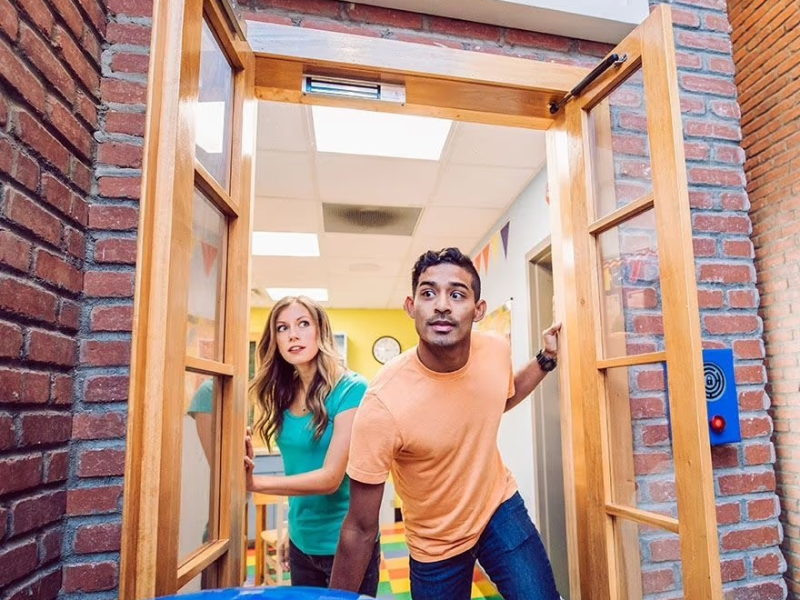
Fully online escape room experience that works for teams of any size. Straightforward puzzles, good for remote teams who want something low-pressure and accessible to anyone with a computer.
Get QuoteRobot Rally
#2 Robot Rally
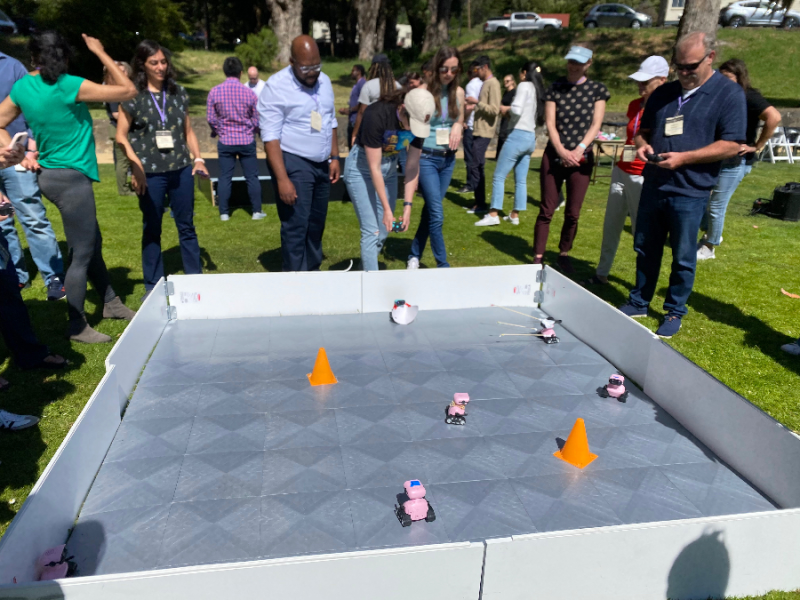
Virtual puzzle challenge with a sci-fi theme. Better for smaller to mid-size groups, engages teams through strategy and collective problem-solving online.
Get QuoteIn-Person Outdoor Adventure Experiences
Best for in-person teams and outdoor mobility
Amazing Escape Race
#3 Amazing Escape Race
Hybrid outdoor adventure that combines escape room mechanics with Amazing Race-style movement and competition. Great for larger teams and high energy groups.
Book Now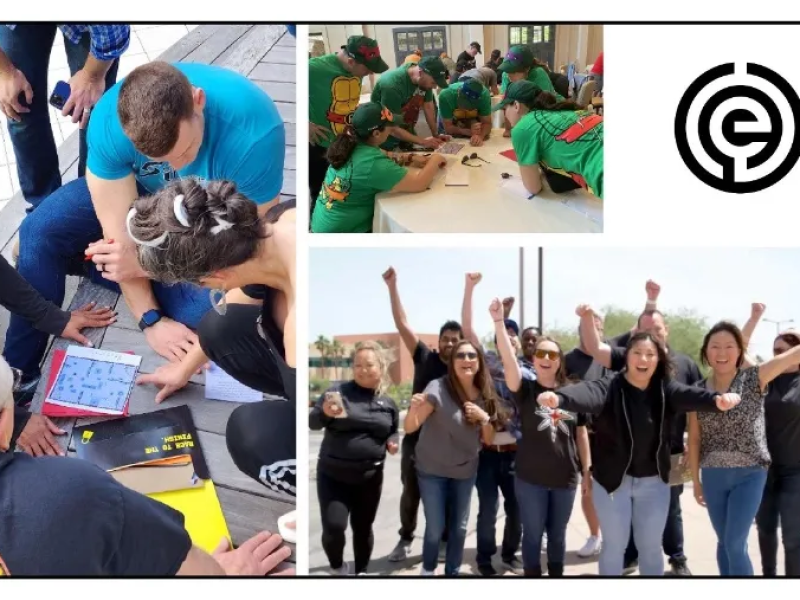
The Great Art Heist
#4 The Great Art Heist
Art museum-themed escape and puzzle hunt. Smaller teams of 10-200 work best here. Great for teams that appreciate creative thinking and narrative-driven challenges.
Book Now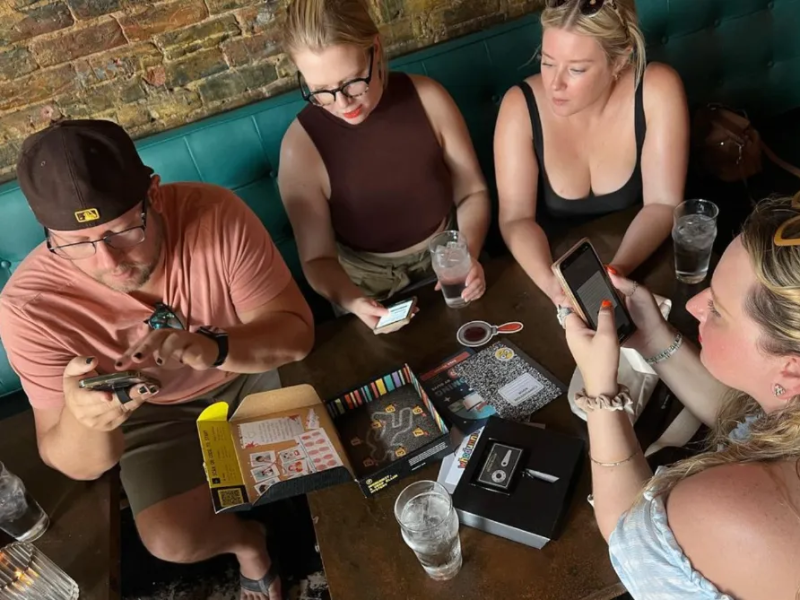
Urban Clue Quest
#5 Urban Clue Quest
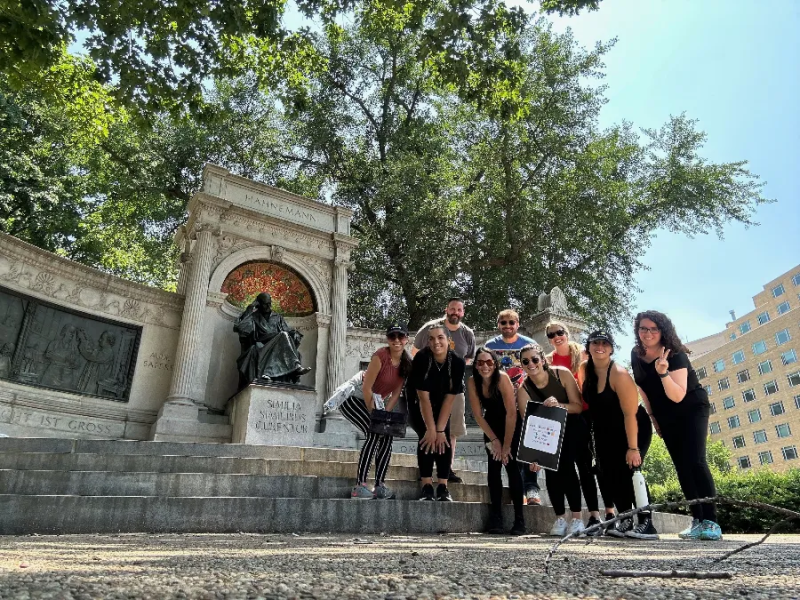
City-wide mystery hunt with clue stations across San Francisco. Teams navigate multiple locations while solving puzzles and uncovering clues. Flexible for large groups.
Book NowHybrid and Flexible Experiences
Best for mixed-remote teams and customized sizing
Anywhere Adventure Quest
#6 Anywhere Adventure Quest
Mobile puzzle and scavenger hunt with escape room elements. Works in-person in the Bay Area or virtual for remote teams. Scales from 10 people to 1,000. Good middle ground between formats.
Book NowWhy Escape Rooms Work for Team Building
Most team building activities feel artificial. Escape rooms don't. The pressure is real (you're running against a clock), the stakes are clear (solve the puzzle or time runs out), and the dynamic emerges naturally rather than being forced by a facilitator with a clipboard.
Here's what happens in those 60 to 90 minutes. You'll see someone take charge without being asked. You'll see someone quiet in meetings suddenly spot the pattern everyone else missed. You'll watch communication either flow naturally or break down completely. Most importantly, you'll see how your team handles uncertainty and failure, because escape rooms expose these moments in real time.
Leadership Emerges Immediately
In escape rooms, formal titles matter almost nothing. A junior team member might naturally start organizing clues while your director freezes. A manager known for delegation might struggle because the problem-solving can't be delegated. Someone who never volunteers gets pulled into a critical role because they're the only one who speaks a language that matches a cipher in the puzzle. Leadership in escape rooms is functional, not hierarchical. That's valuable information.
Communication Breaks Down Visibly
Most office communication fails silently. An email goes unread, assumptions pile up, and nobody notices until quarter-end. In escape rooms, miscommunication is immediate and humbling. Someone doesn't share a key observation. Two people solve the same puzzle separately because they didn't mention it. Shouting over each other makes everything worse. Teams that notice these patterns and self-correct mid-activity gain real insight into how their communication actually works.
Problem-Solving Under Pressure Reveals Strengths
The clock creates pressure, which reveals how people think. Some people panic and check out. Some people get sharper. Some people become more collaborative. Some get territorial about their approach. Watch long enough and you'll see your team's real patterns: who thrives in uncertainty, who needs structure, who can pivot quickly, who insists on finishing things their way even when it's not working.
Virtual vs. In-Person: Which Format Works Best
Your choice depends on your team's location and what you're trying to learn. Virtual escape rooms work well for fully distributed teams or groups that value flexibility, but they flatten the energy and reduce spontaneous collaboration. In-person experiences build stronger bonding and let people read body language, which is how a lot of real communication happens. Some teams benefit from the hybrid middle ground.
Virtual is best for: Remote teams, large groups (100+ people), time-zone challenges, flexible scheduling
In-person is best for: Smaller teams (10-30 people), teams that rarely meet, building closer relationships, observing real body language and dynamics
Hybrid works for: Teams with a mix of remote and office staff, groups that want different options for different occasions
What Skills Escape Rooms Actually Build
Escape rooms aren't just fun. They build specific, measurable skills that transfer directly to work.
| Skill | What You'll See in the Escape Room | How It Transfers to Work |
|---|---|---|
| Lateral Thinking | The team stops looking for the "obvious" answer and questions assumptions | Better problem-solving in product design, customer service, and process improvement |
| Active Listening | Someone says something important and multiple people catch it, double-check it, act on it | Fewer missed details in meetings, better information sharing across departments |
| Role Clarity | Tasks get divided (who reads clues, who tries combinations, who watches the timer) | More efficient project execution with clear ownership and accountability |
| Failure Resilience | They try something, it fails, they adjust and try again without dwelling on the failure | Faster iteration cycles and less fear of experimentation in innovation work |
| Time Management | The clock forces prioritization: some puzzles get skipped, effort focuses on what counts | Better sprint planning and deadline management on actual projects |
| Cross-functional Collaboration | Different people's strengths matter: attention to detail, pattern recognition, boldness | Teams actually use their diverse skills instead of defaulting to hierarchy |
How to Get the Most from Your Escape Room Event
Before the Event: Set Expectations
Tell people upfront that this isn't a competition and winning doesn't matter. The learning happens in how you work together, not in whether you beat the clock. Frame it as observational. Teams that know this going in relax, collaborate better, and get more out of it.
During: Watch for Patterns
If you're a manager, resist the urge to lead. Observe instead. Who asks questions? Who makes assumptions without asking? Who notices when someone's frustrated? Who keeps track of what you've already ruled out? These patterns show you real information about your team's dynamics.
After: Debrief with Honesty
The best teams spend 15 minutes after reflecting on what they noticed. "I saw that we stopped listening after Sarah made that suggestion." "I noticed nobody checked if we'd already tried that code." "I realized I was rushing and missed what felt important to slow down." This kind of honest reflection is where the real learning lives.
FAQ: Escape Rooms for Teams
Q: What if my team is only 5 people? Can we still do an escape room?
Q: How physical are these activities? Can someone with mobility issues participate?
Q: Is it awkward if some people already know each other well and others don't?
Q: How many people should we bring? Is bigger better?
Q: Can we do this remotely across time zones?
Ready to Book Your Team's Escape Room Experience?
Whether your team is fully remote, based in the SF Bay Area, or spread across both, these six experiences range from $25 to $50 per person and reveal real insights about how your team works under pressure.
Explore All OptionsRelated Resources
Looking for other team building ideas? Check out these related guides:
- Virtual Team Building Activities That Actually Work
- How to Assess Team Dynamics in 90 Minutes
- Team Building Budget Guide 2026
- Communication Skills You Can't Teach (But Escape Rooms Reveal)
External Resources
Related: Oakland Team Building | San Jose Team Building | Cooking Classes SF | Small Groups SF | Quick Under 1 Hour | SF Venues | Silicon Valley | Physical Takeaways | Scavenger Hunts